
Notes from The Writer's Corner
How to Cut Words, Without Cutting Resonance, and next week's Craft Conversation with Pulitzer winner Sarah L. Kaufman. Plus—reserve your spot at our fall retreat before it's too late!

Next week …

August 10 at 1 p.m. EST/10 a.m. PST
Sarah L. Kaufman for A Craft Conversation
Join us on Monday for a chat with Sarah L. Kaufman about her new book, Verb Your Enthusiasm: How to Master the Art of the Verb and Transform Your Writing. We’ll talk about how small tweaks can sharpen your voice and bring your prose to life.
Sarah L. Kaufman is a Pulitzer Prize-winning critic, an award-winning author and a writing teacher. As the Washington Post’s chief dance critic she wrote about the arts, entertainment, and society for 27 years. Her work has also appeared in the New York Times, Wall Street Journal and New York Review of Books, among others. Her debut book, The Art of Grace, was a Washington Post Notable Book and won the Barnes & Noble Discover Great New Writers Award and a Spirituality & Practice Award. Sarah has received journalism fellowships from the Nieman Foundation and the French-American Foundation, and she has taught writing at Harvard, Princeton, American University, the National Critics Institute, and New York’s Center for Fiction.
Food for thought …

Killing darlings: How to Cut Words, Without Cutting Resonance
Recently, a writer in one of my classes asked me about cutting an essay to meet a word count. They just couldn’t see how their piece could have the same resonance in fewer words. I’ve had to do this many times, both as an editor and a writer. It’s never easy, but it is always possible and a valuable exercise for any writer.
With that in mind, I thought I’d share a piece I had to cut roughly 200 words from to fit a publication’s guidelines and tell you why I made the choices I did. The final version was performed for Writers Read “Changes.”
Below are: 1. The Final Version. 2. My original draft with lines that were cut highlighted. 3. The specific lines I cut and why.
1. The Final Version: “I Could Tell You”
For many years, if you asked me about the experience itself, I could tell you the actions, the things that took place. The way he slammed me against a wall or punched me or bit me. I could describe each incident clinically, like something I had watched but hadn’t necessarily been involved in.
I could tell you about the two-room cottage in the mountains of California that we lived in. The way he taught me how to split wood and stoke the pot-belly stove. And also how when things turned bad, there was no escape.
I could tell you little things, too. Like how I was wearing my favorite gray ragg wool sweater the first time it happened. I could describe the texture of that garment, coarse and soft all at once, and the frayed threads on its cuffs. I could tell you after we broke up, I never wore it again.
I could tell you when I lived with him, I took baths just so I could sit in the tub alone and inhale the scent of the homemade soap I’d bought that winter. “Sweet Plum” was the name handwritten on the label. I could tell you that a boy sitting next to me in the library commented on the smell. “It reminds me of a bowl of Fruity Pebbles cereal,” he said, and it made me smile because I felt so dirty inside.
I could describe the silver ring I wore then—the curves of the metal, the small red stone set just off center—and the way I stared at it after each time he hurt me because everything about that ring and what he said when he gave it to me felt like a lie I wanted to keep believing.
I could tell you about a plane ride home to visit my family. How when I looked out the window and saw the skyline of New York, I began to cry because I knew I was safe and wasn’t going to go back.
I could tell you when I came home, I was not the same person. That I had nightmares for months. That I threw away every single card or memento he ever gave me.
I could tell you that what I wanted most was to forget, forget it ever happened, and forget the girl it happened to.
I could tell you the things people said when I told them we had finally broken up:
“It’s about time.”
“Why would you ever have gone to live with him to begin with?”
“Why did you stay for so long?”
And I could tell you because of what they said, I didn’t tell them everything. But I could also tell you that just because words aren’t spoken, it doesn’t mean they aren’t felt. Words matter. And they mattered even more at 19.
I could tell you that years later, I stopped in the middle of a therapy session, suddenly aware that for most of it, I had been mindlessly telling a story … A car ride. Him angry. Him punching me.
“I don’t know why I’m thinking about this. It happened so long ago,” I said to the therapist. But as I told the story, I began to see it from the perspective of who I am now—a mother, the wife of a good man who had always loved me kindly, and a woman who was more educated.
And I could also see myself as I had been then. A girl who had never been in love before. A girl who didn’t know what love was supposed to look like. A girl who was taught it was her role to please and not to be pleased. A girl who thought it was better to keep quiet than to be a burden.
I could also see the moments I had lived before it turned bad. The one where he danced with me in the kitchen. The one where I read a book to him, his head in my lap, and he stared up at me smiling. And the one where he said, “I love you,” and I believed him.
And I could feel that girl still inside me. And I knew I could tell her what she’d been waiting all this time to hear. “It was never your fault. And you deserved so much more.”
1. The Original Draft: “I Could Tell You”
(All highlighted text is what was cut for final version.)
For many years, if you asked me about the experience itself, I could tell you the actions, the things that took place. The way he slammed me against a wall or punched me or bit me. I could describe each incident clinically, like something I had watched but hadn’t necessarily been involved in.
I could tell you about the two-room cottage in the mountains of California that we lived in. The way he taught me how to split wood and stoke the pot-belly stove. And also how when things turned bad, there was no escape.
I could tell you little things, too. Like how I remember I was wearing my favorite gray ragg wool sweater the first time it happened. I could describe the texture of that garment, coarse and soft all at once, and the frayed threads on its cuffs. I could tell you after we broke up, I never wore that sweater again.
I could tell you that while I lived with him, I would take baths just so I could sit in the tub alone and inhale the scent of the homemade soap I’d bought that winter. Sweet Plum was the name on the handwritten label. I could tell you that a boy sitting next to me in the college library commented on the soap smell. “It reminds me of a bowl of Fruity Pebbles cereal,” he said, and it made me smile because I felt so dirty inside.
I could describe the silver ring I wore then—the curves of the metal, the small red stone set just off center—and the way I stared at it after each time he hurt me because everything about that ring and what he said when he gave it to me felt like a lie I wanted to keep believing.
I could tell you about a plane ride home to visit my family. How when I looked out the window and saw the skyline of New York, I began to cry because I knew I was safe and wasn’t going to go back.
I could tell you when I finally got out of the relationship, I was not the same person. That I had nightmares for months. That I threw away every single card or memento he ever gave me.
I could tell you that what I wanted most was to forget, forget it ever happened, and forget the girl it happened to. I could also tell you that when he called out of the blue a few months later and said, “You can’t tell me your heart isn’t beating as fast as mine,” I hated him for being right.
I could tell you the things people said when I told them we had finally broken up:
“We always thought he was an asshole.”
“It’s about time.”
“Why would you ever have gone to live with him to begin with?”
“Why did you stay for so long?”
And I could tell you because of what they said, I didn’t tell them everything. But I could also tell you that just because words aren’t spoken, it doesn’t mean they aren’t felt. Words matter. And they mattered even more when I was 19.
And so, in some small way, words made me believe, against all reason, that I was just as responsible for what happened as he was.
Because I had fallen for him to begin with.
Because I had gone to live with him.
And because, even after it happened once, I had stayed.
###
I could tell you that years later, I stopped in the middle of a therapy session, suddenly aware that for most of it, I had been mindlessly telling a story … A car ride. Him angry. Him punching me. Me raising my hand to block him for the next one. Him grabbing my hand. Him bringing it to his mouth. His teeth breaking through my skin. Me screaming.
“I don’t know why I’m telling you this. It happened so long ago,” I said to the therapist. Then, I let the next words linger on my tongue. “But why is it I can tell the stories but have never said the words I was abused?”
Abused was a label I knew. A label I intellectually understood and yet had never given to my own story.
It felt like something that didn’t belong to me or maybe, more accurately, something I didn’t want to own. And yet, if someone else had described the experience I had during that time, that is the label I would have assigned it.
But as I told the story, I began to see it from the perspective of who I am now—a mother, the wife of a good man who had always loved me kindly, and a woman who was more educated.
And I could also see myself as I had been then. A girl who had never been in love before. A girl who didn’t know what love was supposed to look like. A girl who had never been told that it was okay to believe that you deserved more. A girl who society had taught it was her role to please and not to be pleased. A girl who thought it was better to keep quiet than to be a burden.
I could also see the moments I had lived before it turned bad. The one where he danced with me in the kitchen. The one where he tucked my hair behind my ear and whispered, “You’re the most beautiful girl in the world.” The one where I read a book to him, his head in my lap, and he stared up at me smiling. And the one where he said, “I love you,” and I believed him.
And I could feel that girl still inside me. And I knew I could tell her what she’d been waiting to hear.
“It was never your fault. And you deserved so much more.”
3. The specific lines I cut and why.
I want to start by saying that I still like a few of these lines, and if I’d had a bigger word count, I would have kept some of them. That’s a lesson every writer needs to learn. There is a reason it’s called “killing your darlings.”
Okay, let’s go through them …
Cut: I could also tell you that when he called out of the blue a few months later and said, “You can’t tell me your heart isn’t beating as fast as mine,” I hated him for being right.
Why I cut it: When something in a tight piece opens more questions than it answers, I ask: do I really need this? I see this all the time when I edit. In this case, a reader might wonder: What did you say back? How did the phone call end? Did you ever talk again? And although those might be valid questions, when a writer has a limited word count, we want to eliminate anything that takes the reader out of the main point of the piece.
Cut: “We always thought he was an asshole.”
Why I cut it: This is an easy one. It was in response to: “I could tell you the things people said when I told them we had finally broken up,” and given the other responses people gave, it’s already obvious. I didn’t need to spell it out for the reader. In other words, if you’ve repeated a sentiment in different words, cut it.
Cut: And so, in some small way, words made me believe, against all reason, that I was just as responsible for what happened as he was.
Because I had fallen for him to begin with.
Because I had gone to live with him.
And because, even after it happened once, I had stayed.
Why I cut it: This was actually one of the hardest cuts and one I would have kept if I could have. Why? Because so many people in the cycle of abusive relationships blame themselves, and so many of the victims are shamed into thinking they are partly responsible because they got involved with the person in the first place. So why’d I cut it? Because this sentiment is repeated toward the end of the piece (where I look back on the girl I was then).
Cut: Me raising my hand to block him for the next one. Him grabbing my hand. Him bringing it to his mouth. His teeth breaking through my skin. Me screaming.
Why I cut it: The sentences preceding these five give the reader enough information already (“I could tell you that years later, I stopped in the middle of a therapy session, suddenly aware that for most of it, I had been mindlessly telling a story … A car ride. Him angry. Him punching me.”). The reader understands what they need to without these more specific details.
Cut: Then, I let the next words linger on my tongue. “But why is it I can tell the stories but have never said the words I was abused?”
Abused was a label I knew. A label I intellectually understood and yet had never given to my own story.
It felt like something that didn’t belong to me or maybe, more accurately, something I didn’t want to own. And yet, if someone else had described the experience I had during that time, that is the label I would have assigned it.
Why I cut it: This is a big cut. So why’d I make it? With such a tight word count, I need everything I’m leaving in to lead the reader to my takeaway (“It was never your fault. And you deserved so much more.”). Although these lines may hold value, they lead the reader down a slightly different path and again, open up other questions. See a theme here? It helps to go through each line and question: Is this leading the reader to my point?
Cut: A girl who had never been told that it was okay to believe that you deserved more.
Why I cut it: I realized this is too close to my takeaway (aka - the final lines: “It was never your fault. And you deserved so much more.”). Also, the line that runs next to it (“A girl who society had taught it was her role was to please and not to be pleased.”) serves the same purpose and brings in a more universal sentiment (at about the 75-80% mark in an essay, I like to have at least a line or two that reads more universal than personal).
Cut: The one where he tucked my hair behind my ear and whispered, “You’re the most beautiful girl in the world.”
Why I cut it: I like these lines, but again, the others around it gave the reader enough information to understand my point.
When making cuts, some big questions to ask:
• What’s my takeaway (aka: the point of the piece)?
• Is my takeaway still clear?
• Is anything repeating the same sentiment in different words?
• Is everything I’m leaving in leading the reader to the point I’m trying to make?
Happy writing! Hope this helps!
Reserve your spot before it’s too late! …

Don’t miss your chance to join us at the Wisdom & Words Fall Writing Retreat from November 6 to 9, 2026 in the beautiful mountains of Vermont. This retreat is for fiction and memoir writers.
Having interviewed countless authors, editors, and publishing experts, I can say that this fall’s retreat guest instructors are two of the most inspiring and knowledgeable women I’ve ever worked with. It’s one thing to know how to write; it’s another to know how to teach it.
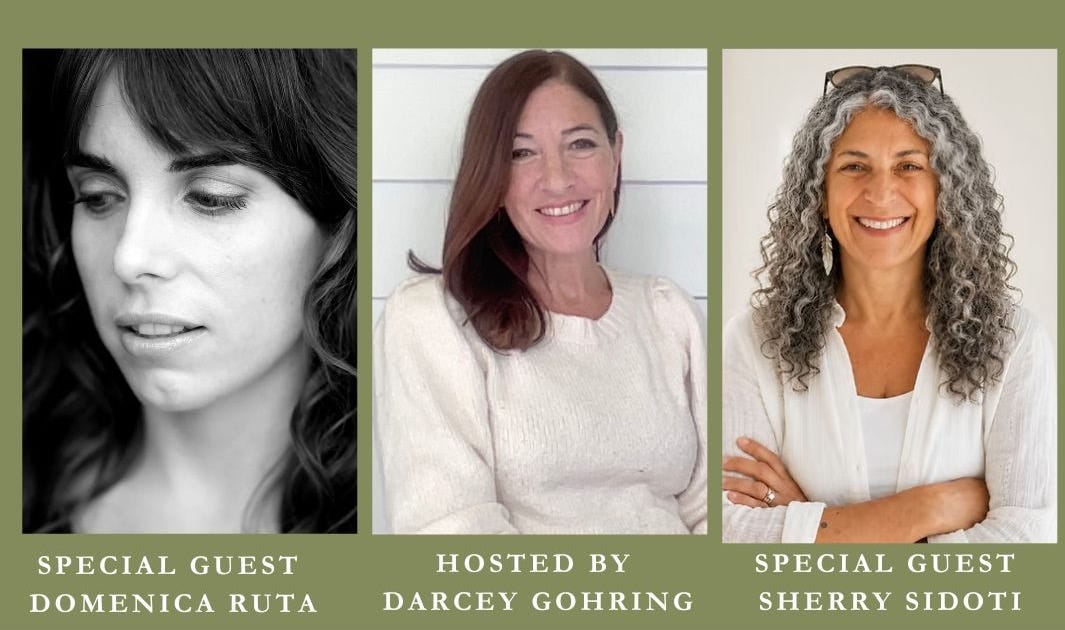
The long weekend will include Craft Conversations and Writing Workshops with New York Times bestselling author and acclaimed writing instructor Domenica Ruta and award-winning author, teacher, and the founder of Embodied Memoir Writing Sherry Sidoti. And a brand new offering—Live Story Share Session. Writers will have the opportunity to read a flash piece and receive direct, supportive craft feedback in real time.
We’ll be staying at Amee Farm Lodge—the perfect setting to get away from it all and inspire your next writing masterpiece. Click HERE to learn more!