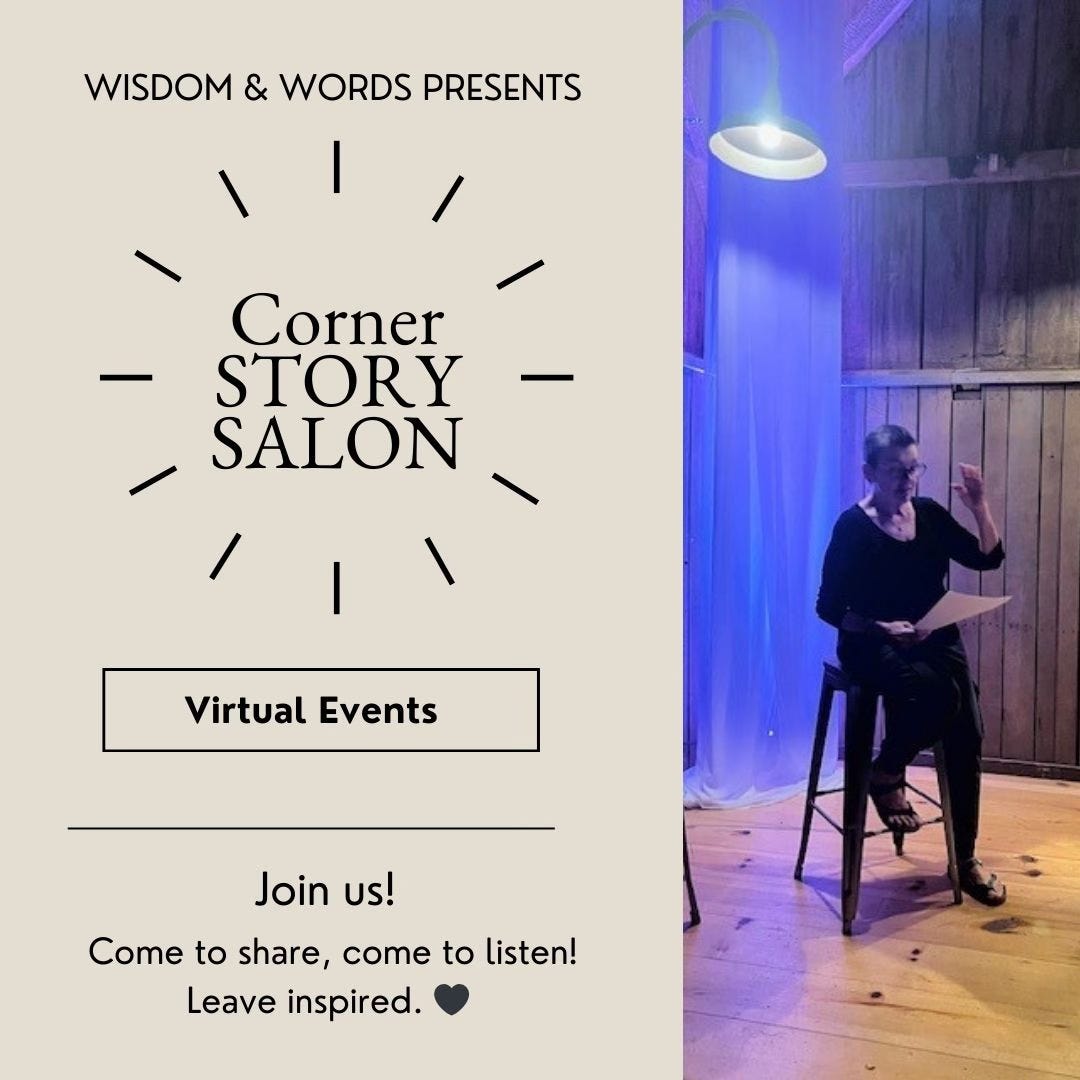
Each weekly online session features live interviews on craft, advice on getting published, and a safe space for writers to get support and advice. Think of The Writer’s Corner as a weekly online coffee date where the topic of conversation always centers around the thing we all love—WRITING. Missed a session or want to revisit one you loved? Here are all the recordings! …
What we covered in this session:
• How to embrace writing as essential to personal well-being rather than getting overwhelmed by publishing goals or self-doubt.
• How to uncover your story’s true meaning and theme as you write instead of waiting to have all the answers upfront.
• How replacing negative terminology with terms like “generative drafts” can help writers focus on strengths instead of fixating on flaws.
• How listening to and offering constructive feedback on other people’s work can strengthen your own writing.
• And more!
What we covered in this session:
• Tips on writing essay openers.
• How to know what belongs in an essay (and what doesn’t).
• The importance of a strong conclusion.
• Tips on pitching to publications.
• And more!
What we covered in this session:
• What makes a query stand out (and what are the biggest mistakes).
• How to select comp titles.
• What to do when a full request or an offer comes in.
• How to survive going “on submission.”
• And more!
What we covered in this session:
• How to keep going after a rejection.
• How to know when it’s time to pivot.
• How to deal with publication anxiety.
• How to stay motivated even when the path forward feels uncertain.
• And more!
What we covered in this session:
• How to keep going even when all you want to do is give up
• What to do when your book doesn’t sell right away
• How Liz took control of her work
• The case for writing in different genres
• And more!
What we covered in this session:
• How Christina found inspiration for her new novel in her own family history
• The architecture of building a story
• Writing dialogue that feels contemporary, even in stories set in the past
• How to embrace editing instead of resisting it
• And more!
What we covered in this session:
• How to write dialogue that feels real
• How to layer in setting
• Why sometimes the answer isn’t to add (it’s to strip things away)
• The case for challenging yourself as a writer
• And more!
What we covered in this session:
• Signs you’re not ready to publish yet
• Writing for therapeutic purposes versus publishing for others
• Taking care of yourself while writing about hard things
• How to create boundaries around your writing
• And much more!
What we covered in this session:
• How Christine went from editor to writer (and what she learned from both sides of the desk)
• What keeps an editor reading (yup, we talked about the first 50 pages)
• Why interiority is the key to making readers feel
• How to balance marketing (will this sell?) with your creative vision
• The #1 thing writers over-focus on that they shouldn’t
• And much more!
What we covered in this session:
• What it actually means to find your ‘voice’ as a writer
• Why revision is where the story really gets made
• Tips for taking and giving feedback
• Why GRIT is just as important as craft to get published
• How to be a fearless writer
• And much more!
What we covered in this session:
• How adaptation helped Sari thrive as a writer through shifting industries.
• Developing ethics and morals to help guide how much of yourself—and others—to reveal on the page.
• Why it’s crucial to cut to the chase and get to the meat of an essay early.
• And much more!
What we covered in this session:
• How to write into a memory to uncover what you truly think and feel.
• Why a lack of initial clarity is actually what gives a piece of writing its unique texture and life.
• Embracing the loops and digressions that the essay form allows for.
• The importance of experimenting with different methods until you find your unique rhythm.
• And much more!
What we covered in this session:
• A deep dive into first pages and how to make them land
• Navigating different publishing paths and why some books are better suited for traditional vs. indie
• How to know which POV (1st or 3rd?) serves your story best
• And much more!
What we covered in this session:
• How to make a platform that is less about self-promotion and more about sustained connection
• Why writers don’t need to be everywhere, but they do need to be intentional where they are and how they show up
• How to build visibility without turning yourself into a full-time marketer
• And much more!
What we covered in this session:
• Why revision is where an essay finds its shape, voice, and authority
• How distance from a topic clarifies meaning (without dulling emotional truth)
• The key differences between personal and reported essays
• How Lisa decided one essay was the right topic for a full-length book project
• And much more!
What we covered in this session:
• How structure helped Jemimah find her story.
• How questioning your protagonist’s decisions can open the story in unexpected ways.
• Why you need to allow your first draft to be messy.
• The case for caring about your relationship to writing as much as the work.
• And much more!
What we covered in this session:
• If you are asking yourself, why should I write my story? Ronit has an answer.
• Why staying true to your own memory matters more than accommodating anyone else’s version.
• Why you often need to write your way into understanding a story’s meaning.
• How writing can change your relationship with a story.
• And much more!
What we covered in this session:
• How impatience with traditional publishing timelines, desire for creative control, and firsthand knowledge of industry frustrations led Sarah to self publish.
• Choosing a publishing path that fits your temperament and goals.
• How word-of-mouth and community drove more sales than social media.
• How tracking data clarified what worked.
• And much more!
What we covered in this session:
• How to package your pitch so it stands out.
• Why specificity (not broad strokes) is what makes a personal story land.
• Why editors want not just what happened, but your point of view on it.
• How writing your way into the angle helps reveal the deeper story.
• And much more!
What we covered in this session:
• How writing personal essays and memoir can help you heal.
• Why feeling is just as important as thinking when crafting personal stories.
• Tips for making readers actually care about your story.
• How to start writing when you know the story you want to write, but not the entry point.
• And much more!
What we covered in this session:
• How to weave sensory details into your writing
• Why writers need to experiment with different iterations
• Ways to handle and apply feedback effectively
• Finding the right point of view and voice for your characters
• And much more!
What we covered in this session:
• How to speak your truth and potentially improve relationships in the process
• How to be brave enough to be vulnerable on the page
• How memoir writing can offer a lot of potential for repair
• How memoir writing can transform your view of a story from narrow to global
• And much more!
What we covered in this session:
• Creating a sacred writing space (even if all you have is a laundry room or a closet)
• Finding inspiration in unexpected places
• How to know when an idea has legs
• And so much more
What we covered in this session:
• What Karen (a former journalist) had to unlearn in order to write novels
• How publishing her second book differed from her debut novel
• Why you need to stop waiting to be “ready” to write and just do it
• And so much more!
What we covered in this session:
• Lisa See’s best writing advice
• Ideas for organizing writing research
• How to handle feedback
• Bringing the universal into any story no matter the setting or time period
• And so much more!
What we covered in this session:
• How to draw from real life to inspire your writing
• Why you can’t (and shouldn’t) try to please every reader
• Crafting dialogue that feels real and natural
• Writing scenes that balance humor and heartbreak
• And so much more!
What we covered in this session:
• Why essay writing is a process of discovery.
• How to choose the details (hint: what you don’t include is just as important as what you do include).
• Why all the “characters” in your essay need to be multidimensional (including you).
• Why the essayist needs to be open to change.
• And so much more!
What we covered in this session:
• How to hook the reader in.
• How to know which scenes will illustrate your story in the best way.
• How to hold a reader’s interest (and keep them reading until the end).
• How to write about family (hint: It’s more about how you felt than what they did).
• And so much more!
What we covered in this session:
• Why every writer needs to stay in touch with their wonder.
• How to handle the inner critic when it shows up.
• Why there’s no such thing as writer’s block.
• Why we need to focus on process over result.
• And so much more!
What we covered in this session:
• How writing can be the path to healing.
• How to write about the hard stuff without retraumatizing yourself.
• Why it’s important to stay in touch with what brought you to writing in the first place (hint: it may not have anything to do with being published).
• Ways to prepare yourself emotionally when your story is out in the world.
• And so much more!
What we covered in this session:
• How essay writing can help you understand yourself in deeper ways.
• How to write about the same general topic but find fresh angles.
• Ways to make your essay and pitch stand out from the rest.
• How to figure out what point you are trying to make.
• And so much more!
What we covered in this session:
• The difference between a writer who gets published and one who doesn’t.
• How to create opening pages that grip the reader.
• Crafting dialog that works.
• Letting yourself be free in the first draft.
• And so much more!
What we covered in this session:
• How to pitch your nonfiction book on proposal (without a complete manuscript).
• How to find comp titles.
• Keys to marketing yourself and your book (and it doesn’t have to be on social media).
• How to hone in on what makes your book special.
• And so much more!
What we covered in this session:
• Ruthie’s path to writing her memoir.
• Why persistence is the key to getting published.
• Tips for getting your first draft down.
• How to give ourselves permission to tell the story that is calling us.
• And so much more!
What we covered in this session:
• How creativity can offer sanctuary.
• How to trust the process.
• Why you shouldn’t be apologetic for following your creative dreams.
• How following your creativity can give you a sense of agency.
• And so much more!
What we covered in this session:
• Tips for staying committed to your writing.
• Conquering the fear (I’m not good enough, I won’t be able to publish it, etc).
• Being open (and listening to) the glimmers when they come.
• Why all writers should start with a question and not an answer.
• And so much more!
What we covered in this session:
• Why every author, no matter the genre (and even if you plan to self publish), should create a book proposal.
• How to use a book proposal as a tool for writing.
• Specific questions you need to ask about your book.
• How to highlight an aspect of your story to help your book stand out.
• And so much more!
What we covered in this session:
• The difference between fact and truth in writing.
• Decision-making on what truths to share and why.
• Considering your relationship with the reader as you write.
• Why tension is a key element to consider.
• And so much more!
What we covered in this session:
• How are you honoring your gifts as a creative?
• Ways to recharge your creative self.
• Choosing energy that replenishes instead of depletes.
• And so much more!
What we covered in this session:
• How to keep believing in the story that’s calling you.
• How do you ground a fictional story in some truth but still allow yourself the freedom as a writer to go where you want?
• Why we need authentic writing with elements like “unlikeable” female characters.
• And so much more!
What we covered in this session:
• What is memoir and what are we trying to accomplish when we write it?
• What are the three acts of memoir?
• Why what we leave out of the story is just as important as what we put in.
• And so much more!
What we covered in this session:
• How, as a writer over 70, Judith wrote a book, found an agent, and landed a publisher in a world that traditionally ignores “older” women.
• How to find your creative sweet spot and tap into your unique voice.
• The importance of ignoring the naysayers and why now is not the time for women writers to sit down and be quiet.
• And so much more!
What we covered in this session:
• How to tap into your creativity when the world around you feels loud.
• Why we need boundaries to create.
• Why writers need to be open to discovery as they write.
• How sticking too much to an outline can hinder your work.
• And so much more!
What we covered in this session:
• Why what we resist is often where our best material lies.
• How granular detail can transform your writing.
• How to believe in the story that is calling you.
• And so much more!
What we covered in this session:
• The importance for writers (especially those of us working on emotional material) to center and regulate ourselves.
• Ways to create a writing practice where we feel safe and supported so we can create our best work.
• How to take our most challenging life experiences and turn them into art.
• How it is in times of uncertainty that our creativity is often most called upon.
• How writing can free you from an experience that has been holding you hostage.
What we covered in this session:
• Articulating your point of view as a creative.
• The importance of paying attention and using care when creating.
• Being comfortable with your unique perspective (in a world of group think).
• And so much more!
What we covered in this session:
• The difference between a writer “performing” versus storytelling.
• How to use language as an instrument of truth.
• The difference between conceiving a plot versus advancing a plot (and how this can help a writer decide what stays in and what comes out).
• Common writing blocks and how to reframe what might be holding you back.
• What makes a great narrator?
What we covered in this session:
• The importance for writers (especially those of us working on emotional material) to center and regulate ourselves.
• Ways to create a writing practice where we feel safe and supported so we can create our best work.
• How to take our most challenging life experiences and turn them into art.
• How it is in times of uncertainty that our creativity is often most called upon.
• How writing can free you from an experience that has been holding you hostage.